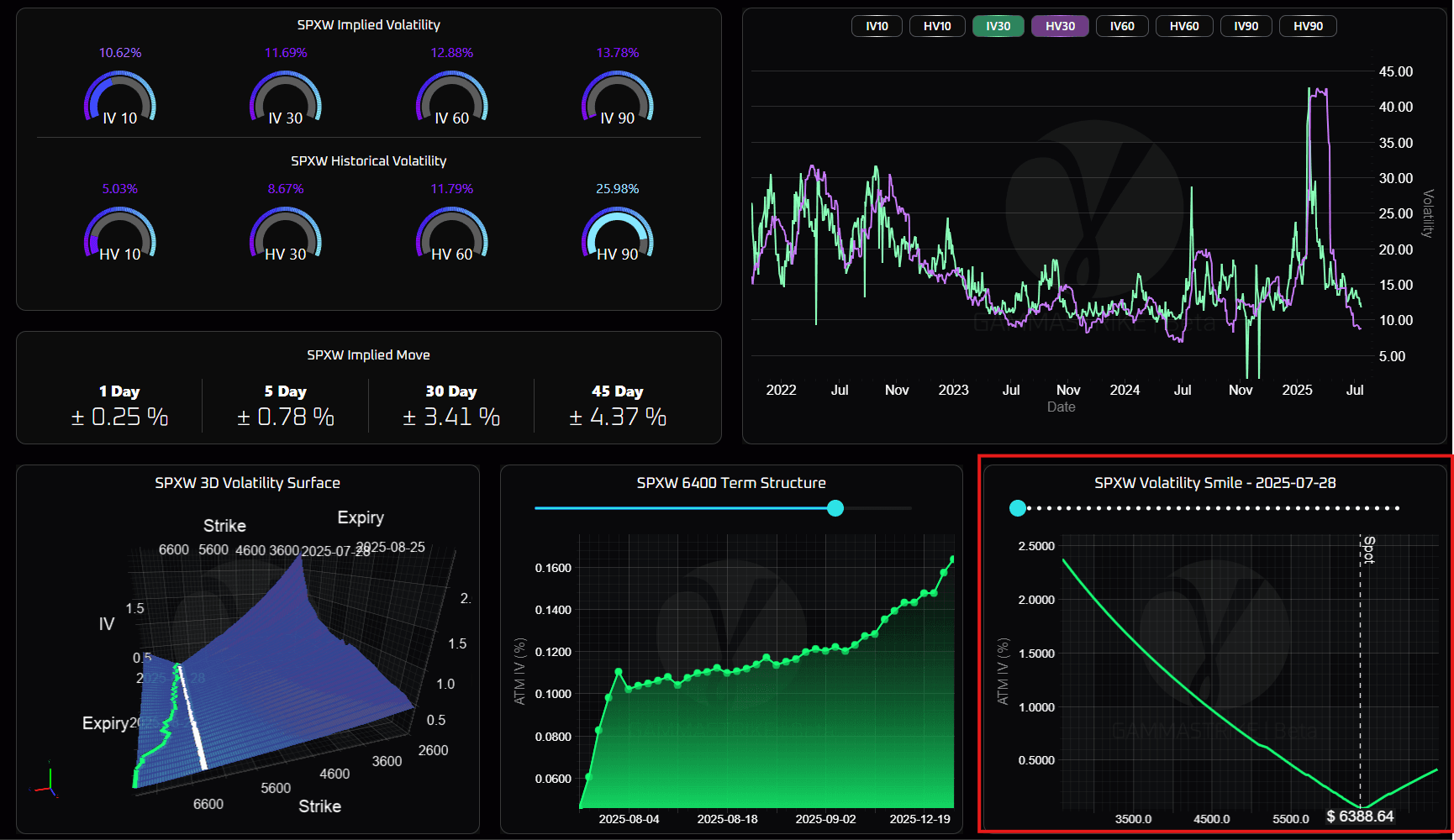
3.2.3 Volatility Tool
3.2.3.1 Volatility Overview
As discussed in section 1.2 Valuing Options Contracts, the implied volatility (IV) of a contract is the current estimate of the most likely value of the contract at expiration. Often, future expectations of volatility are influenced by historical volatility (HV) or the realized volatility of spot in the past. Both HV and IV are expressed as a percentage, which represents the expected or historical range of movement, normalized to a time period of one year. For example, an IV of 40% implies that the market maker is pricing the option such that the underlying price will randomly vary by 40% from the current price over a year timeframe. Higher volatility means more future uncertainty.
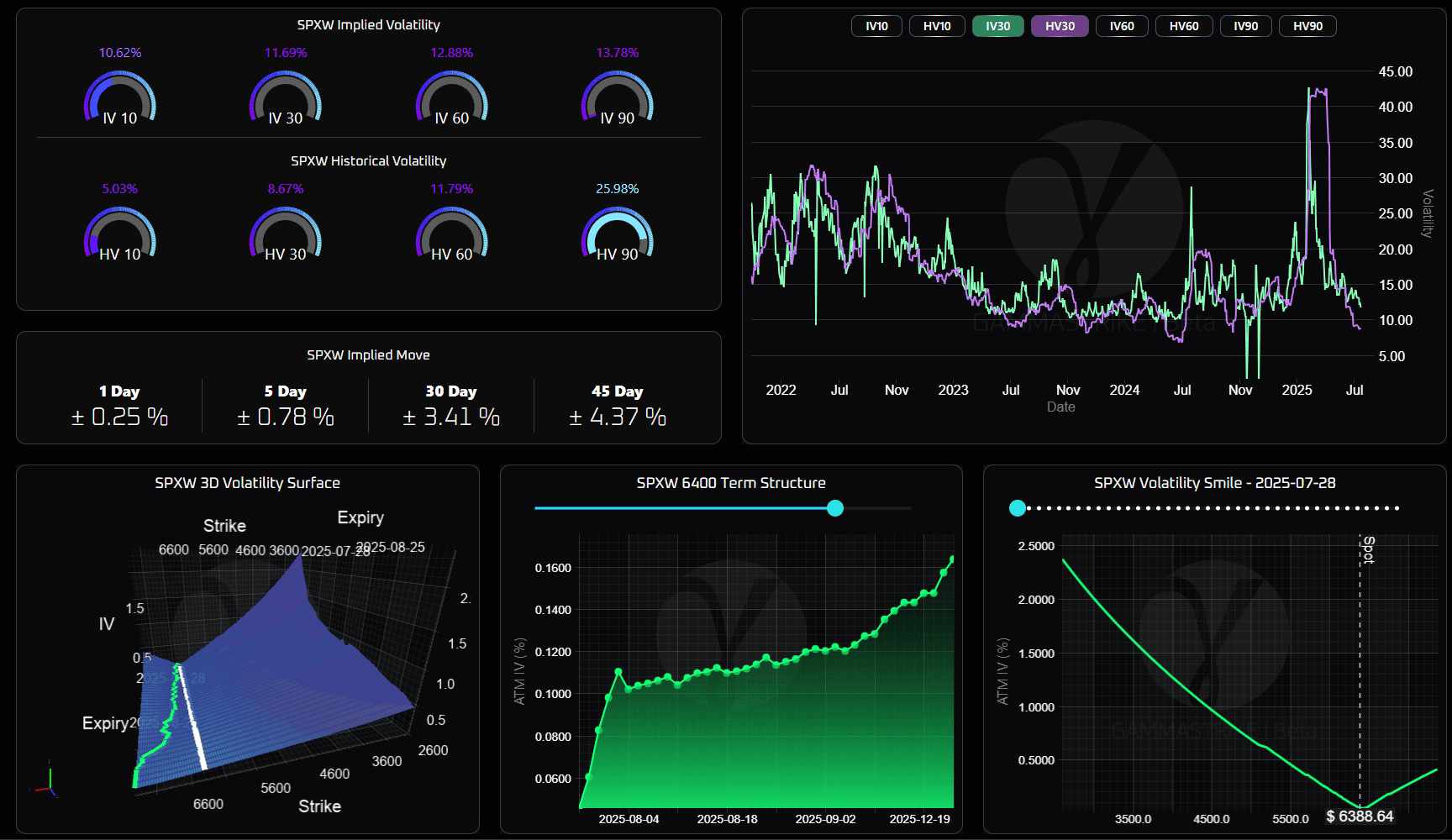
3.2.3.2 Historical and Implied IV Gauges
The HV and IV gauges provide at a glance measures of past and expected future volatility. For the case of historical volatility, the gauges provide a measure of past price changes over a 10, 30, 60, and 90 day period. For the case of implied volatility, the gauges show how volatile market makers expect the price to be 10, 30, 60, and 90 days into the future.
HV and IV, taken together, provide information about how the market expects price to evolve over time. If IV10 is higher than HV10, the market expects the volatility of the underlying to increase in the short term. If IV30 is much higher than IV 90, then the market is likely pricing in increased volatility risk associated with a known future event, such as a quarterly earnings report. Comparing and contrasting these 8 datapoints can tell the trader much about current market expectations and how those expectations are influenced by the past.
The degree to which the gauges are filled provides a historical range for that specific HV or IV measure over the number of days specified by the metric. For example, a full gauge for IV30 means that the current IV30 is higher than it has been in the past 30 trading days. This measurement provides additional insight into how the market might expect volatility to evolve over time, as the market expected volatility to be mean reverting. If IV is historically very low, market participants might increase bets on future increases in volatility, and vise versa.
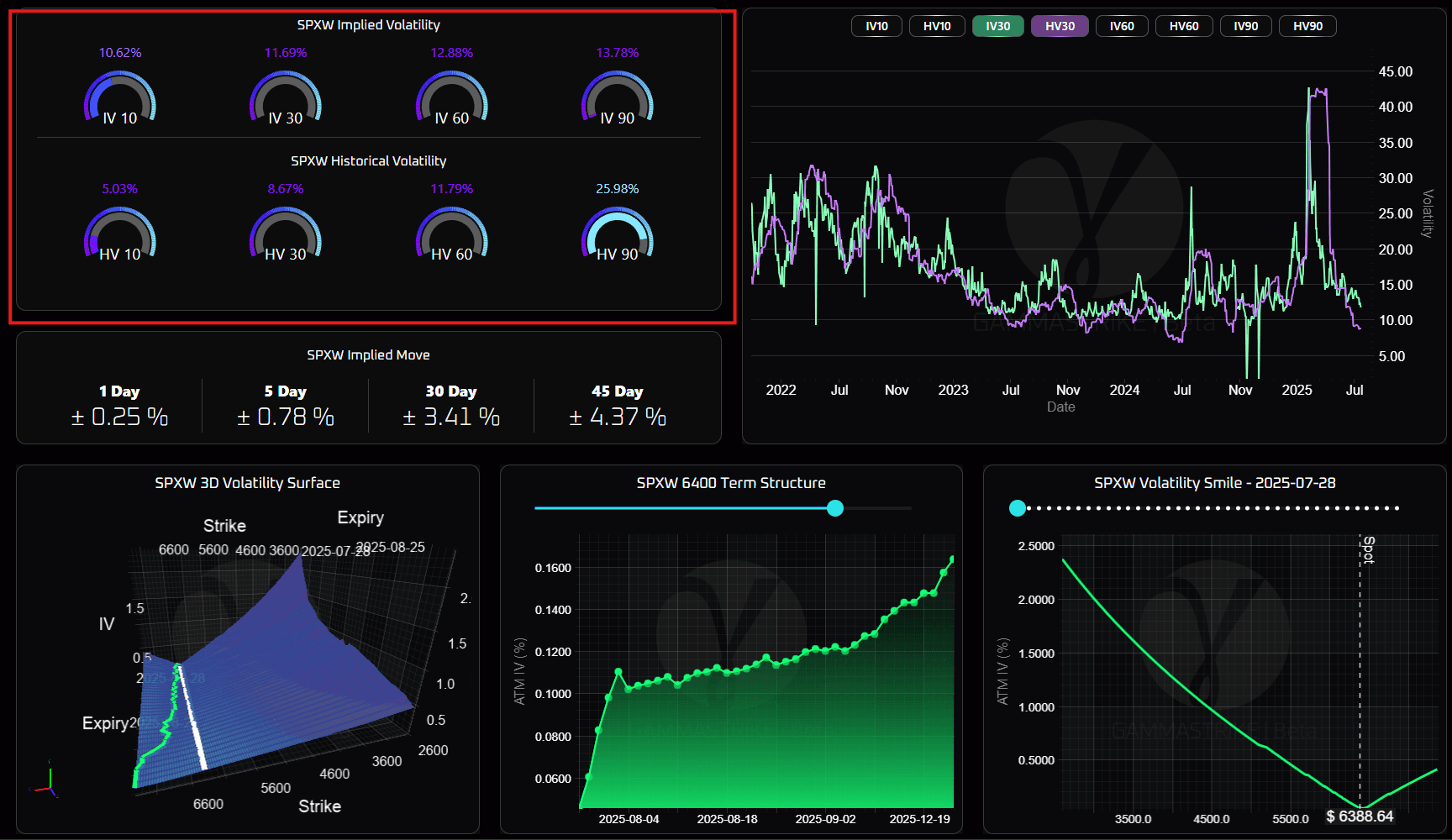
3.2.3.3 Implied Move
The implied move is derived from both HV and IV, and provides a simple measure of how much volatility market makers anticipate for the underlying stock price over 1,5,30, and 45 days. The implied move is not a guarantee of price action within the bounds of the values, but rather what the market maker is pricing into the options of the underlying for a given period. Should the price moves exceed these values, it implies that options were underpriced. If the price stays well under this range, it implies that options were overpriced.
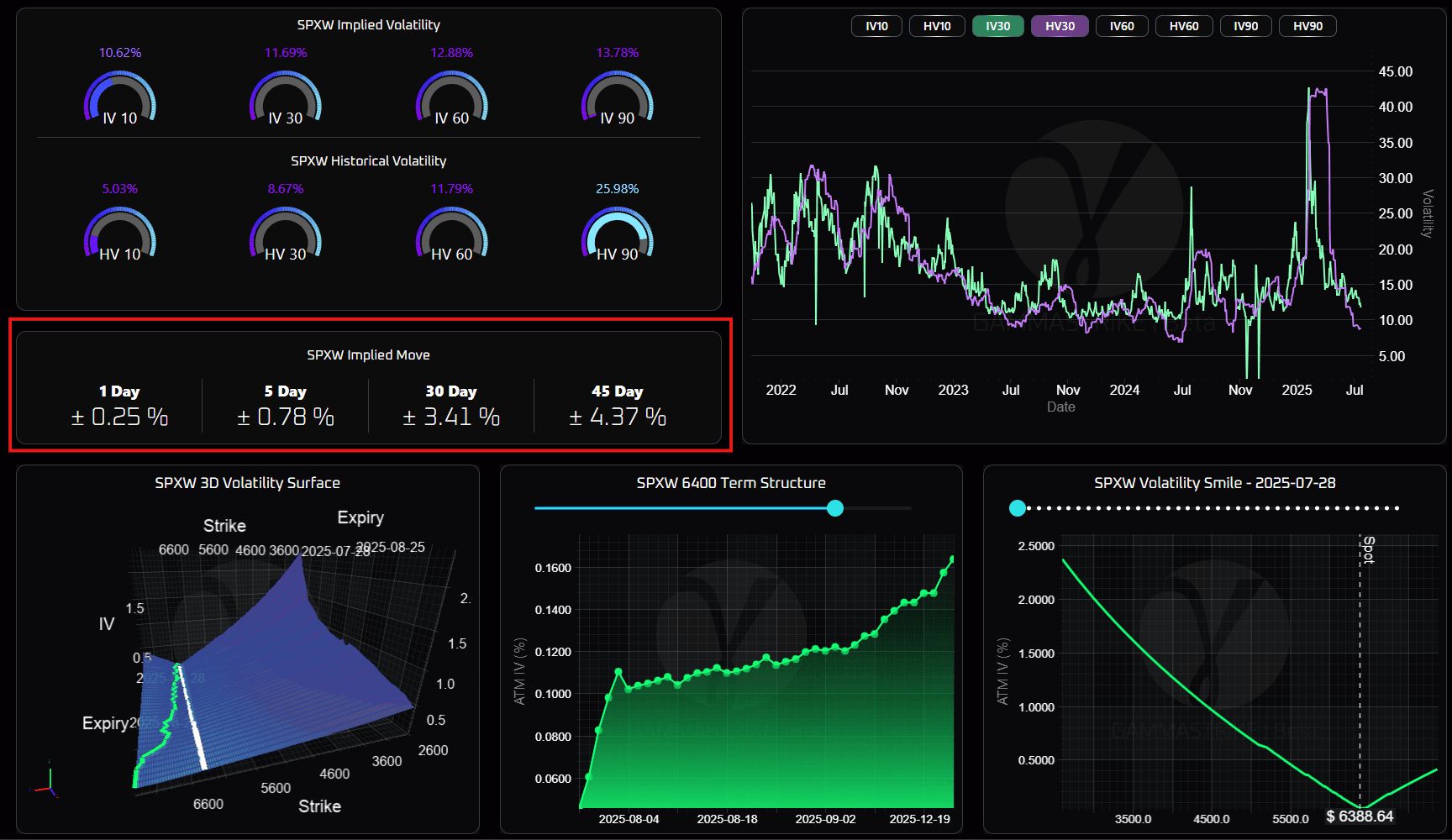
3.2.3.4 Volatility over Time Chart
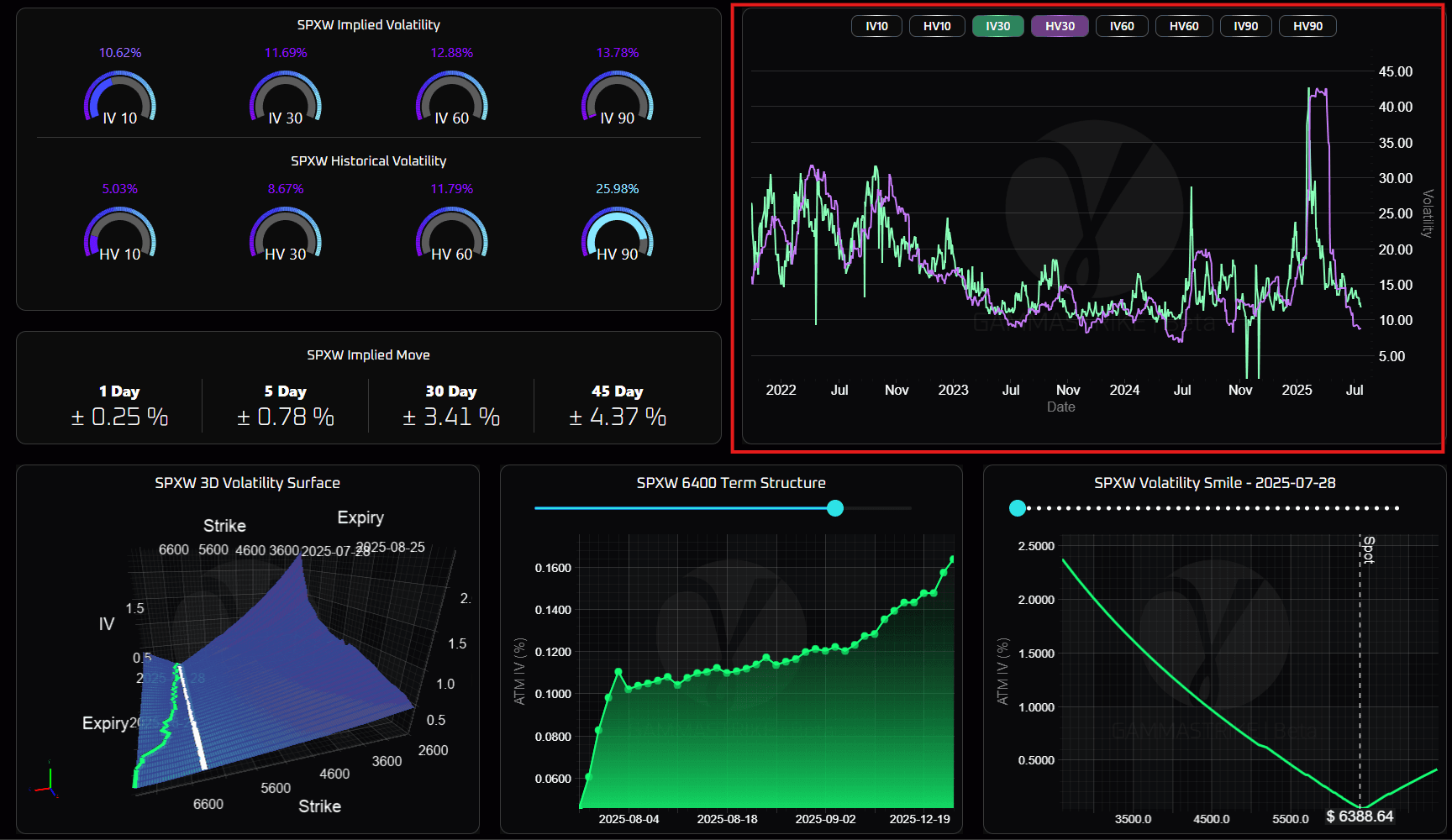
This chart provides historical values for both HV and IV 10, 30, 60, 90 over time. Different historical trends are chosen by clicking on the respective buttons in the chart legend. This data provides additional insights beyond the at-a-glance look provided by the gauges, showing how market expectations have evolved over time. Historical data is provided for up to 8 year look back periods.
Additionally, this chart also provides measures of IV skew over the same time periods. Skew is a measure of the relative IV for puts vs. calls, where negative skew implies put IV is higher, and positive skew implies call IV is higher. Because IV is linked to options demand, it can provide information about the changing demand for puts and calls over time, and is complementary to IV values, which are at the money and less sensitive to put vs. call biases.
3.2.3.5 The Volatility Surface
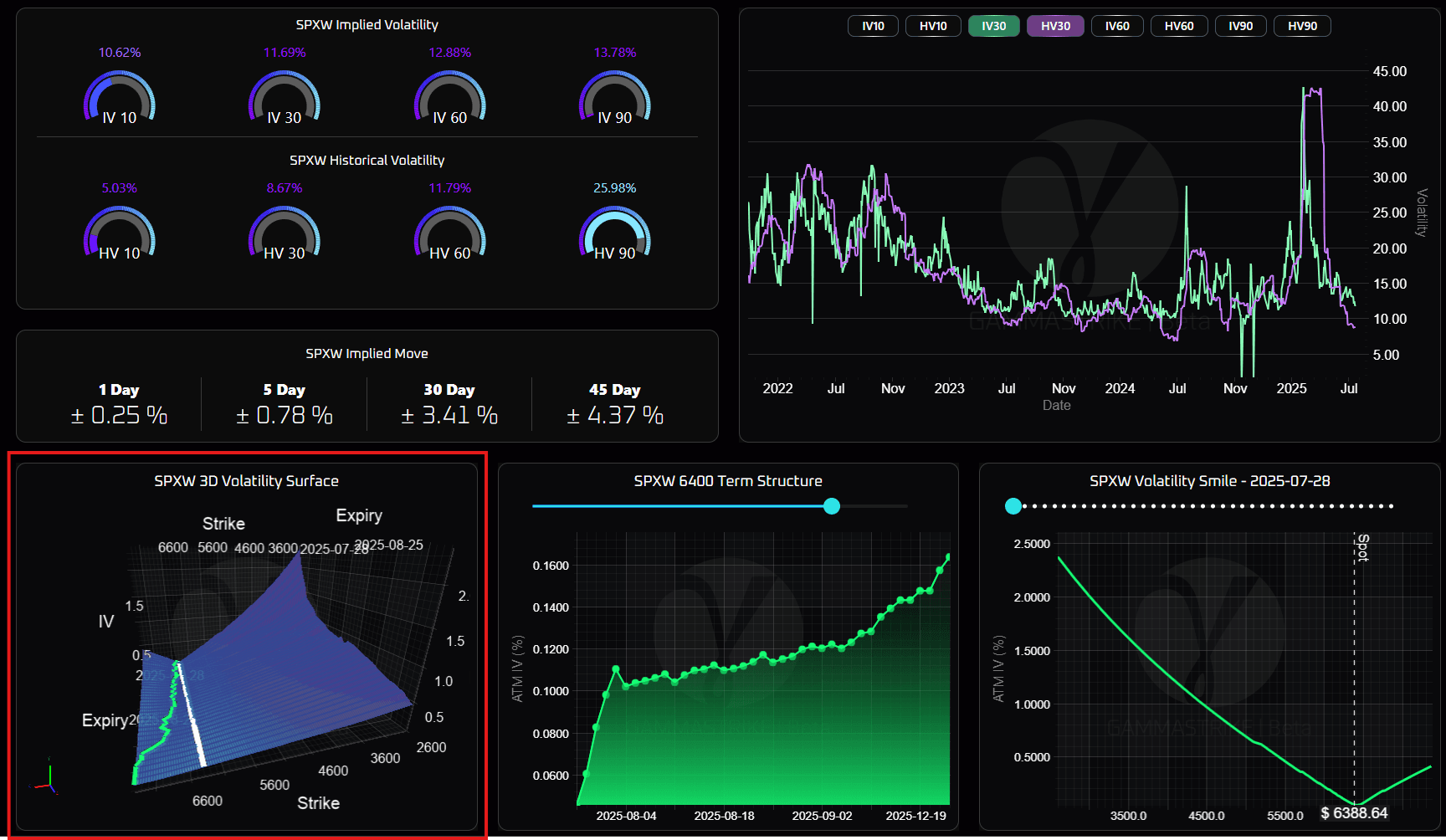
Volatility traders often will refer to the grid of IVs for all strikes and expirations as the volatility surface. This surface provides a full chain view of how the market makers perceive risk. Often this surface can provide insights into expirations or strike ranges that are experiencing low liquidity or mispricing due to outsized supply and demand that could present trading opportunities.
The straight white line represents volatility at the current spot price across all expirations. The yellow line is the minimum IV for each expiration. In general, this minimum coincides with the spot price the market believes is the most probable outcome in the future. For example, the yellow line for the SPX weekly contracts shows this expected spot price increasing over time, as the expectation is for indexes to rise 5-10% per year.
3.2.3.6 Term Structure
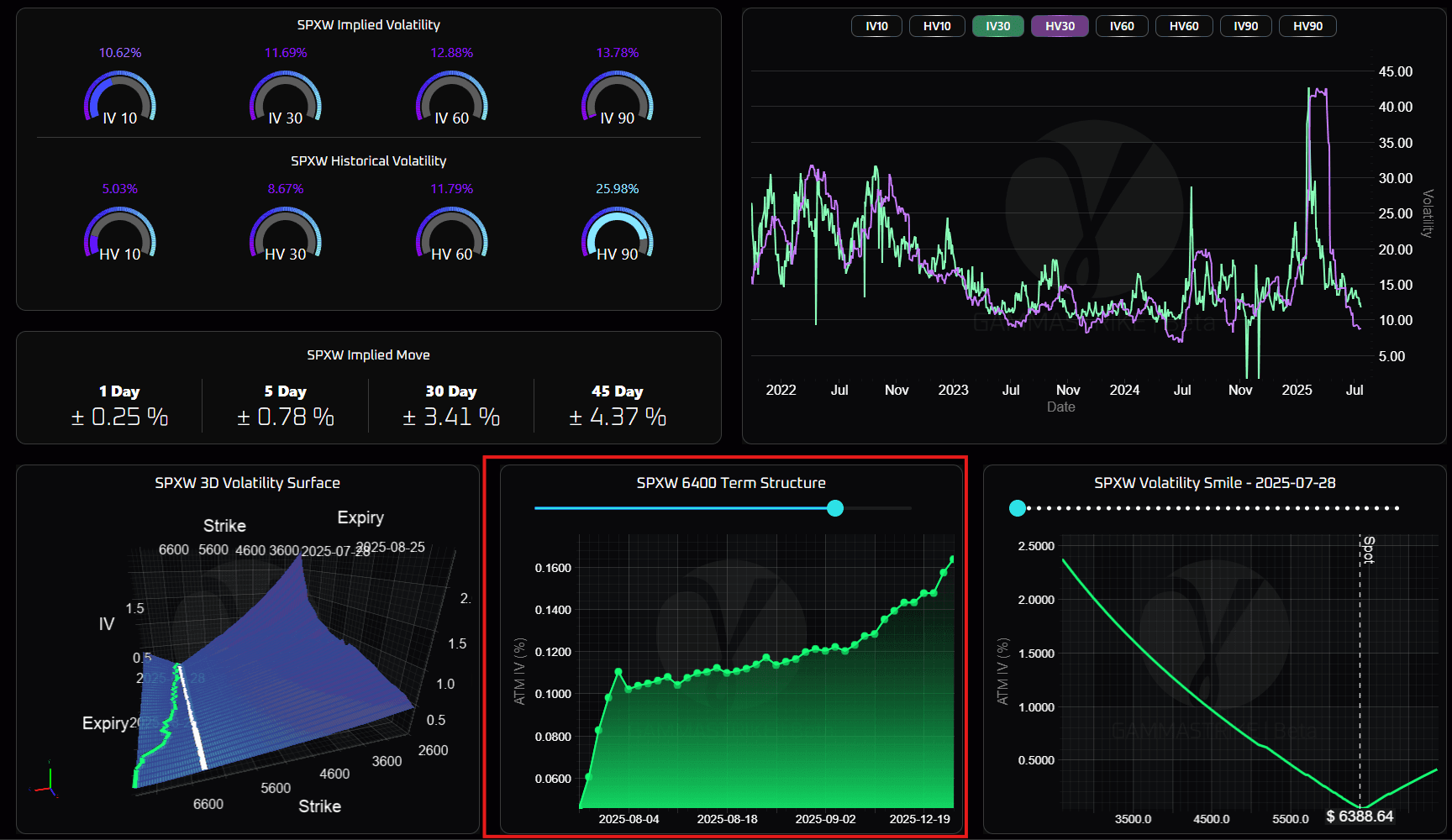
The term structure is simply how the IV at a given strike price evolves over expiration. This slice of the full volatility surface allows for a quick look at how participants expect volatility at a given range to evolve over time. The slider at the top allows the user to view the term structure for any strike on the chain, and defaults to the current spot price at the end of the most recent trading day. Double clicking on the graph returns the slider to spot.
3.2.3.7 Volatility Smile
This tool allows the user to view the volatility smile for a ticker at each expiration. The default value is the next expiration, which persists on the chart when displaying future expirations for comparison.